
Maintaining accurate, reliable pool or spa water testing depends on more than just having the right test strips or chemicals — it depends on how they’re stored. Heat, humidity, and direct sunlight can all quietly degrade testing supplies and treatment chemicals long before their expiration date, leading to inaccurate readings and inconsistent water balance. Pool storage boxes solve this by giving testing kits and chemicals a dedicated, weatherproof, and secure home right at poolside. This guide covers why proper storage matters for water testing accuracy, and what to look for in a pool storage box.
Why Storage Conditions Affect Testing Accuracy
Pool and spa test strips are sensitive by design — that sensitivity is what makes them useful, but it also means they’re vulnerable to environmental exposure. Humidity can prematurely react with the testing pads, heat can accelerate degradation of both strips and liquid reagents, and direct UV exposure can break down chemical treatments like chlorine tablets or pH adjusters faster than expected.
Left in a garage shelf, a sunny pool deck, or an unsealed container, testing supplies can silently lose accuracy well before their listed expiration date — leading to false readings, incorrect chemical dosing, and water balance issues that are difficult to diagnose without realizing the root cause is degraded supplies. A properly sealed, shaded, and ventilated storage box helps preserve the integrity of test strips and chemicals for as long as they’re rated to last.
Material and Weather Resistance
Well-built pool storage boxes are typically made from UV-stabilized resin or high-density polyethylene, materials chosen specifically because they don’t fade, crack, or become brittle after repeated sun exposure — a common failure point for lower-quality plastic storage. This matters especially for testing supplies and chemicals, since these boxes often sit in some of the sunniest, most exposed parts of a pool deck, exactly the conditions that accelerate degradation.
Weatherproofing is equally important. A quality pool storage box should keep rain and splashing pool water from reaching test strips, reagents, and chemical containers, while still allowing enough airflow to prevent condensation buildup — humidity trapped inside a sealed container can be just as damaging to test strips as direct exposure.
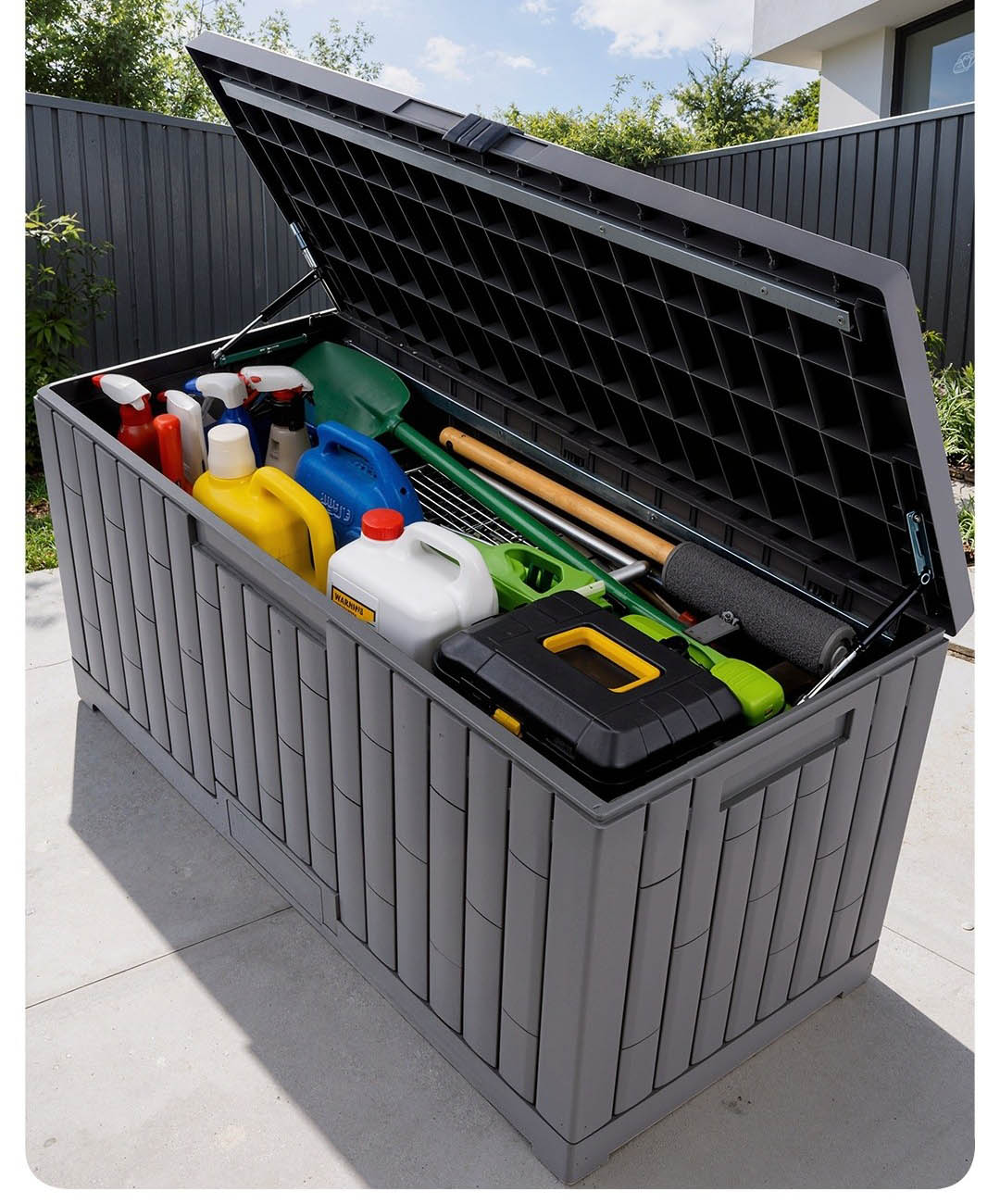
What Pool Storage Boxes Are Typically Used For
- Test strips and testing kits: shielding sensitive strips and reagents from heat, humidity, and UV light that can compromise readings.
- Pool and spa chemicals: keeping chlorine tablets, pH adjusters, and treatment supplies at a more stable temperature and out of direct sun.
- Testing accessories: comparator kits, droppers, and color charts kept organized and protected alongside test strips.
- Cleaning equipment: skimmers, brushes, and vacuum attachments kept together and accessible.
- General poolside supplies: towels, maintenance logs, and other water-care essentials kept in one dedicated spot.
Because water testing is most accurate and most consistently done when supplies are close at hand, storing test strips and chemicals right at poolside — rather than in a distant garage — also makes it easier to test regularly rather than skipping checks out of inconvenience.
Safety Considerations
For households with children or pets, pool storage boxes with lockable lids serve a critical purpose: keeping pool chemicals and testing reagents safely contained and out of reach. This is especially important for chemical storage, where secure, ventilated containment protects both people and the effectiveness of the product itself — many chemicals lose potency or become unstable when exposed to heat and light over time.
Capacity and Layout
Pool storage boxes range from compact bins suited to a testing kit and a few chemical containers, to large-capacity boxes capable of holding a full range of testing and treatment supplies alongside general pool equipment. Some include internal compartments or trays specifically to separate test strips and reagents from bulkier chemical containers, reducing the risk of cross-contamination or accidental damage to more delicate testing materials.
Matching box size to the actual volume of testing and chemical supplies — rather than over- or under-buying — helps keep a testing routine simple and the poolside area functional.
Aesthetic Fit for Pool Areas
Since pool storage boxes typically sit in a highly visible part of the backyard, many are designed to resemble wicker, wood, or stone rather than looking like standard plastic bins. This allows them to blend into pool deck landscaping and outdoor furniture rather than standing out as purely functional storage.
What to Look for When Choosing One
- UV-resistant, weatherproof material built to protect light- and heat-sensitive test strips and chemicals.
- Ventilation to prevent humidity buildup that can prematurely degrade testing supplies.
- Lockable lid for securing chemicals and reagents away from children and pets.
- Compartments to keep test strips and delicate testing accessories separated from bulkier chemical containers.
- Design that complements the pool deck’s existing look.
The Payoff
A dedicated pool storage box protects the accuracy and shelf life of test strips and chemicals that would otherwise degrade from heat, humidity, and sun exposure — helping ensure water testing results stay reliable and treatment chemicals remain effective. For anyone maintaining a pool or spa, it’s a simple upgrade that supports more consistent, accurate water care across every season.
If you’re ready to explore options, the pool and outdoor storage box offers a range of sizes and styles suited to poolside use.